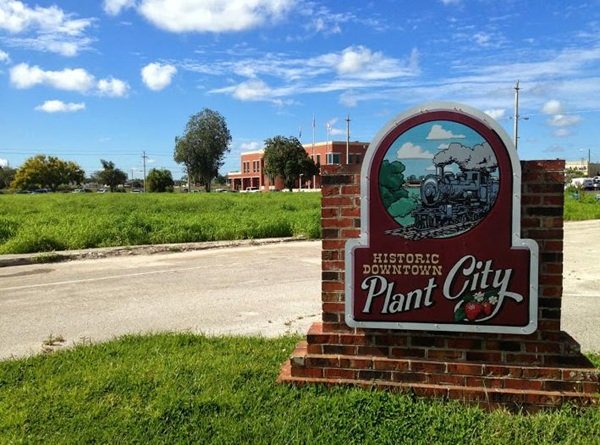
Tree care built around Plant City's farm and field-edge properties, historic downtown oaks, and established neighborhoods — serving Walden Lake, Trapnell, Turkey Creek, and the surrounding agricultural areas.
Plant City grew up around agriculture, not commuting distance to Tampa, and that history still shapes the land today. Strawberry fields, other row crops, and open pastureland surround much of the city, and a large share of Plant City properties sit directly against working farmland rather than facing another subdivision. That single fact changes what tree work looks like here compared to almost anywhere else covered on this site.
Field-edge and fence-row trees are the clearest example. A line of trees along the edge of a strawberry field or pasture isn't just landscaping — it can affect how a tractor turns at the end of a row, whether a sprayer boom clears the canopy, and how close irrigation lines run to a root system that's been spreading for years. Trimming this kind of tree line is as much about keeping farm equipment moving as it is about the tree's own health.
Plant City's historic downtown tells a different, older story. Streets near the century-old commercial core and the neighborhoods built up around it are lined with mature oaks that have been part of the area for generations, planted well before most of the surrounding farmland was subdivided into newer residential development. Those trees carry more history and, often, more structural complexity than younger trees planted in a modern subdivision, which makes careful assessment worth considering before major work near a historic property.
Between the working farms on the outskirts and the older in-town streets, Plant City doesn't fit neatly into either a purely rural or purely suburban tree-care pattern — most jobs here call for judgment about which situation actually applies to a given property.
Plant City covers a wide range of property types, from its historic in-town core to outlying farm and rural communities.
The city's original commercial and residential core, with mature street trees and older established landscaping.
A planned residential community with more uniform, suburban-style landscaping compared to the surrounding farmland.
An outlying agricultural community where residential lots sit close to active farmland and pasture.
A mix of residential neighborhoods and rural properties along the eastern side of the city.
Working strawberry fields and row-crop land bordering many residential and rural properties throughout the area.
Most tree work in Plant City falls into one of two broad categories, depending on whether a property sits closer to the historic core or out toward working agricultural land.
Homes near downtown or in Plant City's older established neighborhoods often have large, aging oaks that have been part of the streetscape for decades.
See tree pruning and arborist services for work suited to established, mature trees.
Properties bordering active fields or pastureland deal with a different set of priorities, centered on access, equipment clearance, and open exposure.
See land clearing and storm cleanup for services common on these properties.
Tree work on or near active farmland comes with practical considerations that don't apply to a standard residential yard. A tree line along the edge of a field needs to be trimmed with equipment clearance in mind, not just appearance — a low branch that seems harmless from the ground can still catch on a tractor cab or a sprayer boom making a turn at the end of a row.
Fence rows raise a related issue. Trees that have grown up along old fence lines between fields or pastures often have roots that have spread into the adjacent growing area over years, and removing or heavily trimming one of these trees can affect soil and irrigation conditions nearby. Coordinating timing with a property's planting or harvest schedule is often part of planning this kind of work.
Access itself can also take longer to plan around on farm and rural properties than on an in-town lot. Long driveways, field access roads, and gates built for farm vehicles rather than service trucks all factor into how a job gets scheduled, and equipment like a stump grinder may need a different approach than it would on a standard suburban lot. Confirming these details during the estimate visit helps keep a job on schedule once it's booked.
Between historic downtown oaks, field-edge tree lines, and open rural acreage, a few specific warning signs are worth watching for on Plant City properties.
Mature street and yard trees near the historic core can carry hidden decay after decades of growth in an urban setting.
Overgrown limbs along a field boundary can interfere with tractors, sprayers, and other equipment turning at row's end.
Fence-row trees with spreading root systems can affect nearby irrigation infrastructure over time.
Trees standing alone on open pasture or field-adjacent acreage face more direct wind exposure than sheltered in-town trees.
Trees on long-held rural properties often carry more deadwood than expected if regular trimming hasn't kept pace.
Saturated field or pasture soil after a wet season can loosen root anchoring, particularly on lower-lying ground.
Plant City grew as an agricultural shipping hub, and strawberry fields, other row crops, and pastureland still surround much of the city today. Many residential and rural properties sit directly adjacent to working farmland, which means fence-row and field-edge trees are a routine part of tree care here.
Yes. Low branches or overgrown canopy along a field edge can interfere with tractors, sprayers, and other equipment making turns at the end of a row, and roots from a fence-row tree can sometimes affect nearby irrigation lines. Keeping field-edge trees trimmed back is often as much about equipment clearance as tree health.
Plant City's historic downtown and surrounding older neighborhoods have a number of mature oaks and other long-established shade trees, and local ordinances may protect certain species or sizes even on private property. Confirming requirements with the city before removal is worthwhile, particularly for large or old trees near a historic home.
Walden Lake is a planned residential community with a more uniform, suburban landscaping style compared to the surrounding farmland, so tree care there tends to focus on routine trimming, storm preparation, and maintaining trees planted as part of the original development rather than field-edge or fence-row work.
Requirements can differ for land actively used for bona fide agricultural purposes compared to residential property, and rules vary depending on whether a parcel falls within city limits or unincorporated Hillsborough County. Confirming with the appropriate local authority before removal helps avoid issues, especially on larger working properties.
Rural and farm properties often have more trees spread across open, exposed land with less wind buffering from nearby structures, which can mean more limb and canopy damage during high winds compared to a sheltered in-town lot. Access for storm cleanup can also take longer on properties with long driveways or field access roads. See storm cleanup or reach out through contact for more.
See the full list of services on the services page, or explore nearby coverage in Valrico and other areas on the service areas page.
Quick Request
Can't connect with us by phone? Message us with the service you need. Send your request and we'll get back to you within 15 minutes.