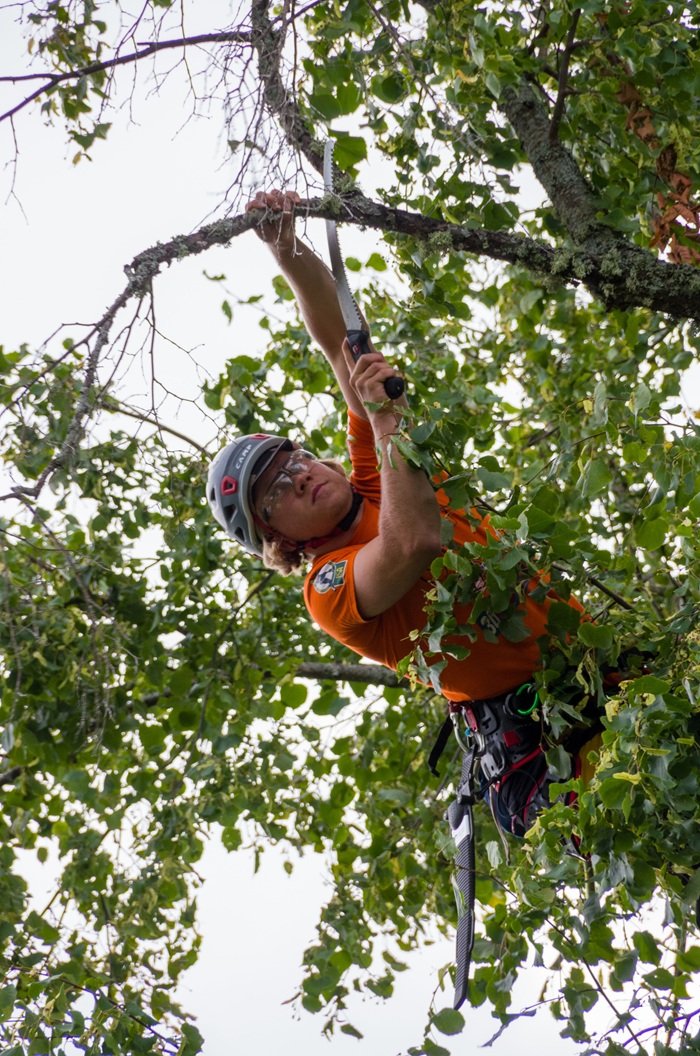
Precise, health-focused tree pruning that addresses structural weakness, storm risk, and long-term canopy strength for homes and businesses throughout Tampa. Every project begins with an on-site assessment and a written, no-obligation estimate.
Tree pruning is a precise, deliberate practice that targets specific branches to address a tree's health, structure, or safety — as distinct from general tree trimming, which is more concerned with shape and clearance. Every cut in a pruning plan has a purpose, whether that's correcting a weak branch union, reducing the risk of limb failure, or removing wood that's already dead or diseased.
Where trimming is largely a maintenance task, pruning is closer to a form of preventive care. It asks a different question: not "how should this tree look," but "what does this tree need to stay structurally sound." That distinction matters most for large, mature trees — the kind common throughout Tampa's older neighborhoods — where a poor cut or a missed structural issue can take years to show its consequences.
Cuts are made at the branch collar rather than flush against the trunk or mid-branch, which allows the tree to seal the wound properly and reduces the entry points available to decay, fungus, and pests. This attention to cut placement is one of the clearest differences between a pruning plan built around a tree's long-term health and a quick pass with a pole saw.
Pruning is often the deciding factor in whether a tree can be preserved at all. A tree with storm damage, early decay, or a structural flaw that would otherwise call for tree removal can sometimes be corrected and kept in place with the right pruning approach, applied at the right time.
Not every tree needs the same kind of pruning. The right technique depends on the tree's species, age, condition, and what the pruning is meant to accomplish — whether that's improving structure, reducing weight, or simply removing what's already dead. An arborist assessment is typically the starting point for identifying which of the following techniques apply.
Selective removal of branches throughout the canopy to reduce density and allow better light and air movement without changing the tree's overall size or shape.
Removal of lower branches to increase clearance above walkways, driveways, roofs, or sightlines, often used near structures and parking areas.
Shortening select branches back to a lateral to reduce a canopy's overall size or weight, typically used on trees that have grown too large for their space.
Removal of dead, dying, or diseased branches before they become a falling hazard or a point of entry for pests and decay.
Corrective pruning on younger or co-dominant trees aimed at establishing a single strong leader and well-spaced branch structure over time.
Selective branch removal that opens a specific view or sightline while preserving the tree's natural form and long-term health.
Pruning decisions are made deliberately, one branch at a time, rather than as a general pass over the canopy. Every project follows the same careful sequence, adjusted to the tree and the goals of the job. See the complete range of offerings on the services page.
The tree's species, age, structure, and surroundings are evaluated to understand what the pruning needs to accomplish.
Branch unions, co-dominant stems, weight distribution, and existing damage are reviewed in detail.
Specific branches are identified, along with the technique — thinning, raising, reduction, or deadwooding — appropriate for each.
Cuts are made at the branch collar to support proper healing and reduce the risk of decay entering the wound.
Pruned material and debris are cleared from the property as part of the job.
The tree and site are reviewed to confirm the pruning plan was carried out and the property is left clean.
Pruning priorities shift depending on the property, the number of trees involved, and who is ultimately responsible if something goes wrong.
Homeowners are usually focused on the long-term health of a smaller number of trees, along with reducing risk near the home itself. Common priorities include:
See broader options for maintaining a single-property landscape on the residential tree service page.
HOAs, office parks, and commercial landscapes typically manage more trees across a wider footprint, with liability spread across shared spaces. Common priorities include:
Learn more about ongoing maintenance on the commercial tree service page.
Tampa's tree canopy includes a wide mix of species, and pruning needs vary considerably between them. Mature live oaks, common throughout the area's older neighborhoods, tend to develop wide, heavy limbs over decades of growth — structural pruning on these trees is generally about managing weight distribution and correcting weak branch unions before they become a failure point in a storm.
Laurel oaks and water oaks grow faster and are more prone to internal decay as they age, which makes routine deadwooding and structural checks more important on a shorter cycle. Southern magnolias, with their dense, low branching habit, are often pruned for clearance and airflow rather than significant structural correction. Younger trees of any species usually benefit most from early structural pruning — light, well-placed cuts in the first several years of growth that help establish a single dominant leader and well-spaced scaffold branches, reducing the need for more invasive corrective work later on.
Because pruning needs are so specific to species and age, a general schedule rarely fits every tree on a property. An arborist assessment can identify which trees on a commercial or residential site need attention now, and which can wait for the next maintenance cycle.
Pruning can resolve a surprising range of problems that might otherwise seem to call for removal. A tree with a cracked or damaged limb, a co-dominant stem putting stress on the trunk, or storm damage limited to part of the canopy can often be corrected with targeted cuts, provided the trunk and root system remain sound.
That said, pruning has limits. A tree with extensive trunk decay, a failing root system, or damage that extends into the main structure is generally beyond what pruning can fix safely, and continuing to prune around the problem can delay a decision that ultimately still ends in removal. If a tree has already fallen or is actively hazardous, that's a different situation entirely — see emergency tree removal for time-sensitive hazards.
The most reliable way to know which category a specific tree falls into is a direct, on-site assessment rather than a guess from the ground.
Pruning is a precise, health-focused practice that targets specific branches to address structure, disease, or safety. Trimming is broader, general canopy shaping aimed mainly at clearance and appearance.
Mature trees generally benefit from structural pruning every few years, though the right interval depends on species, age, growth rate, and prior pruning history.
Yes. Reducing weight in a canopy, correcting co-dominant stems, and removing deadwood all reduce the points of failure a tree presents during high winds.
Yes. Removing too much live canopy in a single visit stresses a tree and can trigger weak, fast-growing regrowth. Pruning is typically spread across a modest percentage of live canopy per cycle.
Crown reduction shortens select branches to reduce a canopy's overall size or weight, typically used when a tree has grown too large for its space or become top-heavy.
Pruning larger branches, working at height, or working near power lines carries real risk and can also harm the tree if cuts are made incorrectly. Most pruning is safer and more effective when handled by a professional.
In many cases, yes. If the trunk and root system remain sound, targeted pruning can address storm damage, disease, or structural weakness without requiring full removal.
Yes. A free, no-obligation estimate can be requested through the estimate form on this site or by phone. You can also reach out through contact or confirm coverage on the service areas page.
See the full list of services on the services page, or check the service areas page to confirm coverage near you.
Quick Request
Can't connect with us by phone? Message us with the service you need. Send your request and we'll get back to you within 15 minutes.