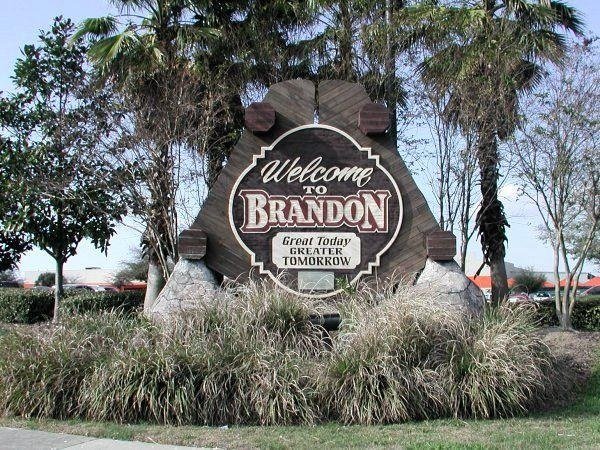
Tree care built around Brandon's HOA-governed subdivisions, retention pond buffers, and the SR 60 commercial corridor — serving Providence, Bloomingdale, Lake Brandon, and Kings Lake.
Brandon grew up differently than Tampa's older urban core. Rather than a dense historic street grid, most of Brandon developed from the 1980s onward as a series of planned subdivisions — curving streets, cul-de-sacs, and communities built around a shared HOA rather than individual lots platted a century ago. That development pattern shapes almost everything about how tree work gets approached here.
Because so much of Brandon was built out in phases by a handful of large developers, many neighborhoods share a similar story: builder-installed trees planted at the same time across dozens of lots, now reaching a comparable size and age within the same few years. A subdivision that was new construction in the late 1990s is now dealing with three-decade-old canopy trees that have outgrown their original builder-grade placement near driveways, sidewalks, and drainage easements.
HOA governance adds another layer that's less common in older parts of Tampa. Many Brandon communities have landscaping guidelines that cover which trees can be removed, whether a replacement is required, and how work near common areas or retention ponds needs to be handled. None of this replaces county permit rules for protected species — it sits on top of them, which means a property owner in a Brandon subdivision is often navigating two sets of requirements rather than one.
Add in Brandon's mix of residential neighborhoods and a busy commercial corridor along State Road 60, and the tree care needs across the area end up varying more by property type — HOA subdivision, standalone home, or commercial lot — than by any single defining local feature the way an older neighborhood's historic grid or a coastal area's soil type might.
Brandon covers a wide area, with distinct pockets shaped by when they were developed and how they were planned.
A large planned community with mature landscaping now decades into its original build-out.
An established residential area with a golf course backdrop and a longer-standing tree canopy than newer sections of Brandon.
A lake-centered community where several properties border water and associated drainage features.
A residential subdivision with typical HOA-managed common areas and retention features.
The area's main commercial spine, lined with retail centers, offices, and shared parking-lot landscaping.
A mix of older acreage properties and newer infill development on the fringes of central Brandon.
Tree care requests in Brandon tend to split along fairly clear lines, depending on whether a property sits inside a residential HOA community or along the commercial corridor.
Homeowners in communities like Providence, Kings Lake, or Lake Brandon are usually balancing their own preferences with association guidelines that weren't written with any one tree in mind.
See residential tree service for more on single-property tree care.
Retail centers, offices, and multi-tenant properties along Brandon Boulevard face a different set of priorities tied to shared liability and customer-facing appearance.
See commercial tree service for more on multi-tenant and business properties.
Much of Brandon's residential landscape was shaped by stormwater planning as much as by aesthetics. Subdivisions built from the 1980s through the 2000s were typically designed around retention ponds meant to manage runoff, and trees planted near those ponds or along drainage easements often serve a function tied to the original site plan, not just appearance.
That history matters when a tree near a pond or easement needs attention. Removing or significantly altering trees in these zones can intersect with buffer requirements set at the time the subdivision was built, on top of whatever an HOA's current landscaping rules say. It's a layer of planning that's easy to overlook until a removal or major trim is already underway.
The "builder tree" pattern is the other piece of this. Many Brandon lots received the same handful of fast-growing species at construction, planted close to the house for quick curb appeal rather than with 20 years of growth in mind. Those trees are now old enough that structural pruning — addressing weight distribution and clearance before storm season — tends to matter more here than it might in a neighborhood with a slower, more varied planting history. See tree pruning for more on this kind of structural work, or tree trimming for routine canopy maintenance.
Given Brandon's mix of aging subdivision trees, retention features, and a busy commercial corridor, a few specific signs are worth flagging early.
Builder-era trees planted at the same time across a subdivision can reach structural limits around the same time as their neighbors.
Saturated soil near ponds and drainage areas can affect root stability, especially after heavy rain.
Trees planted close to the house during original construction can outgrow their space and affect nearby hardscaping.
Overgrown trees along SR 60 storefronts can obscure signage and reduce visibility for passing traffic.
Longer-established trees in older sections of Brandon may carry more deadwood if maintenance has lapsed.
Overhead utility lines along residential streets require professional handling for any nearby trimming.
Many Brandon subdivisions have HOA landscaping guidelines covering replacement requirements, approved species, or association notification, in addition to any Hillsborough County permit rules.
Trees near a stormwater retention pond may be subject to buffer or setback rules tied to the subdivision's original site plan. Checking with the HOA or county before removal can prevent complications.
Much of Brandon was developed in phases from the 1980s through the 2000s, with builders planting the same species across new lots at the same time, so many neighborhood trees are now reaching a similar age and size together.
Commercial properties along State Road 60 tend to prioritize signage sightlines, parking lot clearance, and liability management, which differs from the concerns of a single-family subdivision lot.
Properties closer to the Alafia River floodplain can experience wetter soil during heavy rain, which may affect root stability. A structural check is worth considering for mature trees in these lower-lying areas.
Newer subdivisions often have younger trees that benefit from early structural pruning, while older, more established neighborhoods tend to have larger, more mature trees needing attention to weight distribution and storm readiness.
See the full list of services on the services page, or explore nearby coverage in South Tampa and other areas on the service areas page.
Quick Request
Can't connect with us by phone? Message us with the service you need. Send your request and we'll get back to you within 15 minutes.