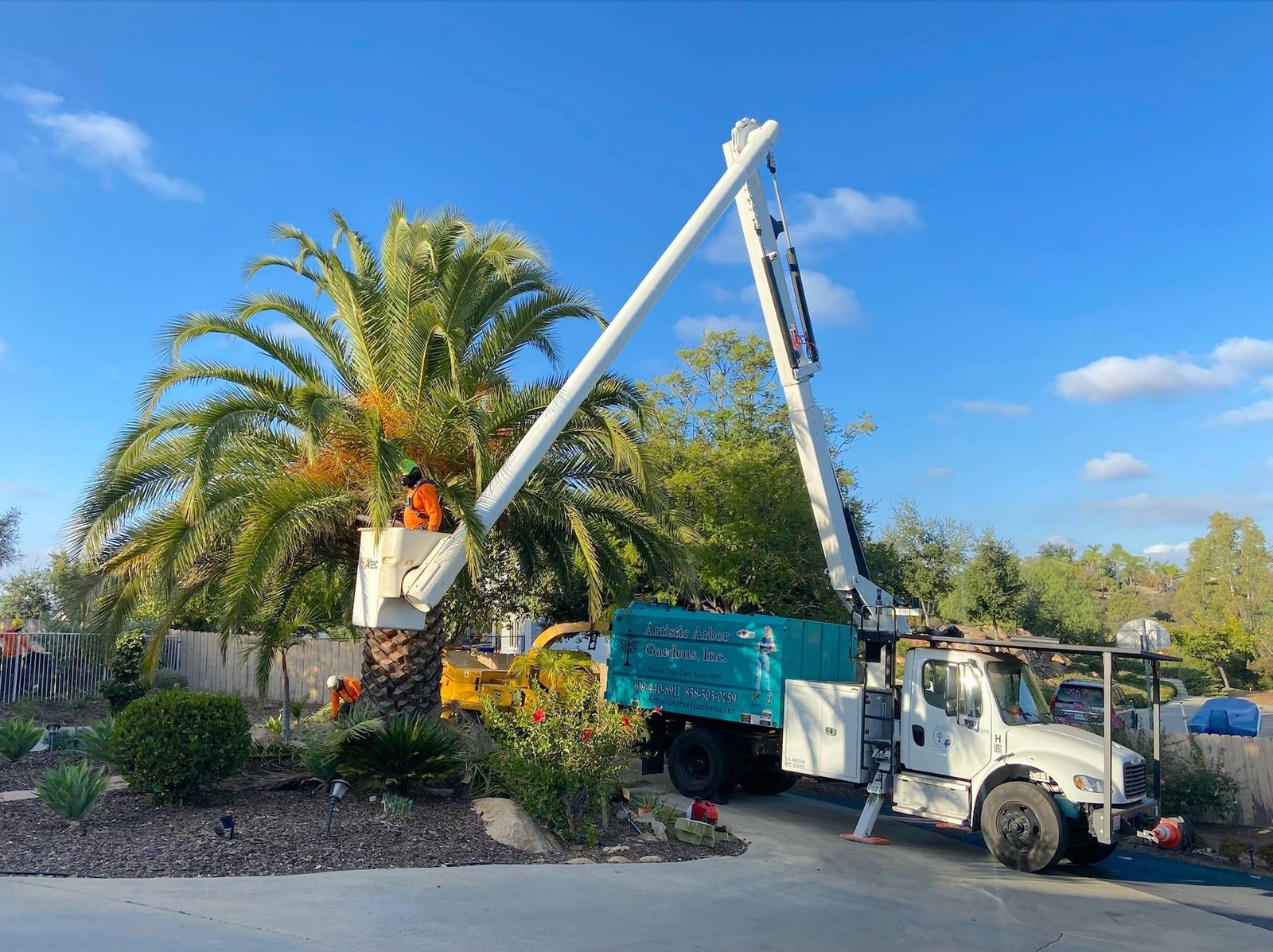
Species-appropriate palm trimming that removes dead and declining fronds while protecting the nutrient reserves a palm needs to stay healthy, serving homes and businesses throughout Tampa. Every job begins with an on-site assessment and a written, no-obligation estimate.
Palm tree trimming is often treated the same way as hardwood tree trimming, but the two are not interchangeable. A hardwood tree has a branching structure that can tolerate a wide range of cuts without threatening the tree's survival. A palm has none of that redundancy — it has a single growing point at the very top of the trunk, and every green frond attached below that point is actively feeding the tree.
That single detail changes the entire logic of a palm trim. Where a hardwood benefits from thinning out a portion of its live canopy, removing green, healthy fronds from a palm does the opposite of what property owners often assume: it doesn't make the tree stronger or more storm-resistant, it removes stored nutrients the palm is actively relying on. A proper palm trim is closer to a maintenance task focused narrowly on dead, damaged, or clearly declining material, not a general reshaping of the crown.
This distinction matters most around hurricane season, when the idea of "lightening up" a palm before a storm is common but frequently applied incorrectly. Aggressive over-trimming — often called a hurricane cut — strips a palm of the very fronds it needs to recover and regrow after severe weather, leaving it more vulnerable rather than less.
Getting the trim right requires knowing the specific palm in front of the crew: its species, its self-cleaning habits, and how much canopy it can safely lose in a single visit. A palm that's already showing signs of serious decline may be a better candidate for palm tree removal rather than continued trimming.
One of the more persistent misconceptions in palm care is the belief that removing most of a palm's canopy — leaving only a small tuft of upright fronds at the crown — makes the tree safer heading into storm season. This style of over-trimming has become common enough that it's earned an informal name: the "hurricane cut." Despite the name, it does not reduce a palm's risk of storm damage.
Green fronds, even those hanging below horizontal, are still photosynthesizing and supplying the palm with the nutrients it needs to maintain and repair itself. Removing them prematurely puts a palm under nutritional stress at exactly the time of year when it needs its reserves the most. A palm that's been aggressively over-trimmed often shows the consequences months later, in the form of slower growth, nutrient deficiency symptoms in new fronds, or a canopy that struggles to recover fully before the next trimming cycle.
There's also a structural argument against the hurricane cut, not just a nutritional one. A full, properly maintained canopy actually helps a palm's trunk flex and shed wind more evenly. Stripping the canopy down to a small tuft can concentrate stress differently across the crown rather than eliminating it. The safer, more effective approach to storm preparation is targeted removal of dead and clearly dying fronds — not a wholesale reduction of the living canopy.
A correct palm trim comes down to a fairly simple standard, even though it's frequently ignored in practice: remove what's dead or clearly dying, and leave what's still green and functional. The categories below outline how that standard applies in the field.
Brown, dry fronds that have completely died are the primary target of any standard trim and can be removed without affecting the palm's nutrition.
Fronds showing significant, progressive browning or damage — rather than minor discoloration — are generally safe to remove as part of routine maintenance.
Green fronds, even those hanging below horizontal, are still contributing nutrients and are typically left in place regardless of appearance preferences.
Heavy seed pods can be trimmed for cleanliness and to reduce debris, since removing them has minimal impact on the palm's overall nutrient reserves.
Fronds cracked or broken from wind, impact, or pruning tools are typically removed to prevent further tearing at the base.
Removing fronds above the horizontal line simply for a cleaner look is the core practice to avoid, regardless of the season.
Every palm trim follows the same disciplined sequence, adjusted for the palm's species, height, and current condition. The goal is always a trim that supports the palm's long-term health rather than a quick, purely cosmetic pass. See the full range of offerings on the services page.
The palm's species is confirmed, since self-cleaning habits and frond retention vary considerably between types.
Each frond is assessed individually to separate dead and declining material from healthy green growth.
Only fronds meeting the removal criteria are marked, keeping the trim within safe, health-conscious limits.
Fronds are cut at the proper point along the base without damaging the trunk or growing point.
Loose boots and cut fronds are cleared from the property as part of the job.
The finished canopy is reviewed to confirm a clean, health-conscious result.
Palm trimming needs look different depending on the property and how many palms are involved.
Homeowners are typically maintaining a handful of palms around a pool, driveway, or yard, with health and tidiness both in mind. Common priorities include:
See broader options for a single-property yard on the residential tree service page.
HOAs, apartment communities, and commercial landscapes often maintain rows of specimen palms along entrances and common areas, where a consistent look across the property matters. Common priorities include:
Learn more about ongoing maintenance on the commercial tree service page.
Palms can generally be trimmed at any point during Florida's growing season, which gives more scheduling flexibility than many hardwood species. That said, a trim ahead of hurricane season has a practical purpose: removing dead and dying fronds reduces the amount of loose debris that can be pulled free in high winds, without touching the healthy canopy the palm needs to hold onto.
After a storm has passed, palms are often left with a mix of legitimately damaged fronds and healthy ones that simply look disheveled. It's worth distinguishing between the two before trimming — a frond that's bent or torn from wind is a reasonable candidate for removal, while a green frond that's simply out of position from the storm usually isn't. If a palm has sustained more serious damage, such as a snapped trunk or a compromised growing point, that's a different situation covered under emergency tree removal rather than routine trimming.
Outside of storm-related timing, most palms do well on a routine schedule of one or two trims per year, adjusted for how quickly a given species accumulates dead material.
Sabal palms, common throughout Tampa as Florida's state tree, are naturally self-cleaning and shed their own dead fronds over time, which means trimming is often more about tidying up boots and stray growth than removing large amounts of dead material. Queen Palms, by contrast, tend to hold onto dead fronds until they're removed, and their fast growth rate means they typically need more frequent attention to keep dead weight from building up in the canopy.
The Canary Island Date Palm retains a distinctive skirt of frond boots that many property owners choose to keep for its traditional look, though it can also be removed in stages for a cleaner appearance — this is largely an aesthetic decision rather than a health requirement. King Palms and Areca Palms are self-cleaning and generally low-maintenance, needing only occasional removal of stray dead material. Washingtonia palms are known for holding a heavy, dense skirt of dead fronds if left untrimmed for long periods, which is why they're a common source of the over-trimming problem discussed earlier — the temptation to remove too much at once is strongest on palms that have gone the longest without maintenance.
Understanding a palm's natural habits — self-cleaning or not, fast or slow growing — is part of building a trimming schedule that keeps the tree healthy without over- or under-servicing it.
Most palms benefit from trimming once or twice a year, though the right interval depends on species and growth rate. Faster-growing palms may accumulate dead fronds more quickly.
A hurricane cut removes fronds well above the horizontal line, leaving only a small tuft at the top. Despite the name, it doesn't make a palm safer in a storm and removes fronds the palm relies on for nutrients.
Only dead, clearly dying, or damaged fronds should typically be removed in a standard trim. Green, healthy fronds are still contributing nutrients and are generally left in place.
Trimming taller palms involves working at height with sharp tools and heavy frond bases, and fronds near power lines add further risk. Most palm trimming is safer and more effective when handled by a trained crew.
Palms can generally be trimmed year-round in Florida's climate, though many property owners schedule a trim ahead of hurricane season. Timing can vary by species and site conditions.
It depends on the species and the look desired. Some palms self-clean naturally, while others retain a skirt of boots that can be left in place or removed depending on preference.
Yes. Removing too many green fronds strips a palm of stored nutrients and can weaken its structure over time, making it more susceptible to nutrient deficiency and storm damage.
Yes. A free, no-obligation estimate can be requested through the estimate form on this site or by phone. You can also reach out through contact or confirm coverage on the service areas page.
See the full list of services on the services page, or check the service areas page to confirm coverage near you.
Request a Free Estimate Today
Quick Request
Can't connect with us by phone? Message us with the service you need. Send your request and we'll get back to you within 15 minutes.