Tampa, Florida

Stump Grinding Services in Tampa, FL

Professional stump grinding that clears the way for new grass, garden beds, or landscaping after tree or palm removal, for homes and businesses throughout Tampa. Every job begins with an on-site assessment and a written, no-obligation estimate.

Stump grinding service in Tampa, Florida
Site Restoration

What Stump Grinding Involves

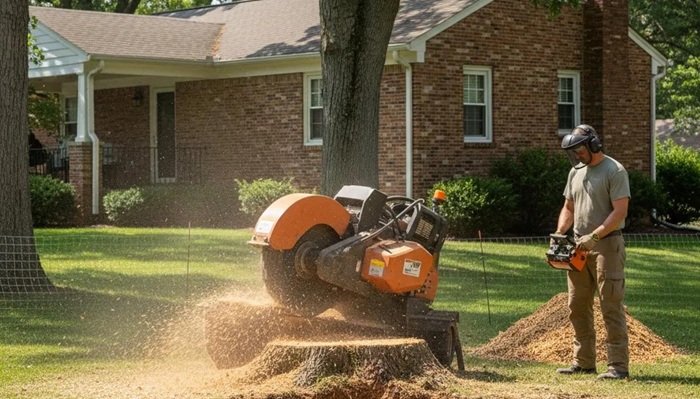
Stump grinding is the step most properties need after a tree or palm has been taken down, and it's often the difference between a yard that looks finished and one that still shows the job isn't quite done. A specialized grinding wheel is used to mechanically shred the stump and the upper portion of the root mass down below the surrounding grade, leaving a bed of wood chips and soil where the stump used to stand.

Unlike full stump removal, which physically pulls the entire root structure out of the ground, grinding is a more contained process. The deeper lateral roots are left in the soil to break down naturally over time, which means less disruption to surrounding soil, nearby plantings, hardscaping, or irrigation lines. For most residential and commercial properties, this is the more practical option — it accomplishes what property owners actually need, which is a level, usable surface where a hazard or eyesore used to be.

Grinding is typically scheduled as a follow-up to tree removal or palm tree removal, though it's just as often requested on its own for stumps left behind by a previous removal, storm damage, or a property that's changed hands with old stumps still in place.

Left in place, a stump is more than a cosmetic issue. It can become a tripping hazard in a lawn, a magnet for termites and wood-decaying fungi that can spread to nearby structures, and a persistent source of new sprouts pulling energy from the surrounding root system. Grinding addresses all of that at once.

Why It Matters

Why Leftover Stumps Are a Problem

A stump left in the ground rarely stays a neutral, harmless feature of the yard. Over time, it tends to create a handful of predictable issues, which is why most property owners eventually decide to have it removed rather than work around it indefinitely.

🦵

Tripping Hazard

A stump hidden by grass or landscaping is an easy thing to catch a foot on, especially in areas used by children, guests, or lawn equipment.

🐜

Pest Attraction

Decaying stumps are a known draw for termites and other wood-boring pests, which can migrate toward nearby structures once the stump is depleted.

🍄

Fungal Growth

Rotting stumps often support fungal growth, some of which can spread to nearby trees or landscaping through root contact in the soil.

🌱

Persistent Sprouting

Many species will continue sending up new shoots from a live stump, requiring ongoing cutting back until the stump itself is gone.

🚜

Mowing & Landscaping Obstacle

A stump interrupts mowing patterns and limits what can be planted or installed in that section of the yard.

🏡

Curb Appeal & Property Value

A cleared, level yard generally presents better than one with visible stumps, particularly for properties preparing to sell or lease.

How It Works

Our Stump Grinding Process

Every stump grinding job follows the same sequence, adjusted for the stump's size, wood density, and how close it sits to structures, utilities, or irrigation lines. See the full range of offerings on the services page.

01

Site Assessment

The stump's diameter, root spread, and surrounding obstacles are evaluated before equipment is brought in.

02

Utility Check

The grinding area is checked for irrigation lines, shallow utilities, or buried obstacles that could affect the equipment path.

03

Grinding

A grinding wheel shreds the stump and upper root mass down below the surrounding grade.

04

Debris Handling

Wood chips can be left on-site as mulch or hauled away, depending on the property owner's preference.

05

Backfill & Leveling

The ground cavity is backfilled and leveled so the area is ready for grass, mulch, or new plantings.

Making the Right Call

Stump Grinding vs. Stump Removal

Grinding and full stump removal solve the same basic problem in different ways, and the right choice usually comes down to what's planned for the site afterward.

FactorStump GrindingStump Removal
What's taken outStump and upper root massEntire stump and major root system
Soil disturbanceMinimal, localizedMore extensive excavation
Typical timelineFaster, usually same-dayLonger, depending on root spread
Best suited forReclaiming lawn space, general landscapingNew construction, foundations, deep replanting
Remaining rootsDeeper roots left to decompose naturallyMost of the root system extracted
Site impactSmall, easily backfilled cavityLarger excavation area to refill

For most residential and commercial properties, grinding is the more practical and cost-effective option. Full removal is generally reserved for sites where deep excavation, new construction, or a structure is planned in that exact spot.

Property Types

Residential & Commercial Stump Grinding

Stump grinding needs vary depending on the property and how many stumps are involved.

Residential Stump Grinding

Homeowners are typically clearing one or a few stumps left behind after removal, with reclaiming the yard as the main goal. Common priorities include:

  • Removing a tripping hazard from the lawn
  • Preparing the area for new sod, mulch, or garden beds
  • Eliminating a source of persistent sprouting
  • Reducing pest attraction near the home

See broader options for a single-property yard on the residential tree service page.

Commercial Stump Grinding

HOAs, property managers, and commercial sites often deal with multiple stumps across shared landscaping, parking areas, or common grounds. Common priorities include:

  • Coordinated grinding across several stumps in one visit
  • Restoring a clean, presentable look for shared spaces
  • Reducing liability from tripping hazards in high-traffic areas
  • Documentation suitable for property management records

Learn more about ongoing maintenance on the commercial tree service page.

Palm-Specific Grinding

Grinding Palm Root Balls

Palm stumps grind differently than hardwood stumps, and it comes down to root structure. A hardwood tree like an oak or pine has a single central taproot along with a network of larger structural roots, which can make grinding slower going through dense, woody material. A palm, by contrast, has a fibrous, mat-like root ball with no central taproot — the material is generally softer and more uniform, which often allows a palm root ball to grind down more quickly than a hardwood stump of a similar diameter.

That said, palm root balls can spread wide near the surface, so the grinding area sometimes needs to cover more surface area even if the depth required is less. This is especially relevant after a palm tree removal, where the trunk itself is already gone and the root ball is the only remaining material to clear before the area can be replanted or resodded.

Whether the stump in question came from a hardwood tree or a palm, the same on-site assessment applies: diameter, root spread, and surrounding obstacles determine the approach before grinding begins.

One other difference worth noting is depth. Because a palm's root system spreads out relatively close to the surface rather than anchoring deeply, grinding a palm root ball typically doesn't need to go as far down as a mature hardwood stump does to achieve a clean, plantable surface. That can make palm root ball grinding a quicker job overall, even when the visible diameter looks similar to a hardwood stump nearby.

Larger Projects

Multiple Stumps & Site Clearing Projects

Properties with several stumps — whether from a past storm, an older removal project, or a section of yard that was never fully cleaned up — are usually more efficient to handle in a single visit rather than scheduling separate jobs for each stump. Grinding equipment can typically move from stump to stump on the same property without significant setup time between them, which is reflected in combined pricing for multiple stumps compared to booking them individually.

This is also common on properties undergoing broader land clearing, where a section of a lot is being opened up for new construction, landscaping, or expanded use. In those cases, stump grinding is often one part of a larger site preparation scope rather than a standalone service, and can be scheduled alongside brush clearing and debris removal.

For HOAs and commercial properties in particular, a batch of scattered stumps left behind over several years of piecemeal tree work is a fairly common scenario. Rather than treating each one as a separate service call, it's usually more efficient to walk the whole property once, note every stump that needs attention, and handle the grinding in a single scheduled visit. This also tends to simplify record-keeping for property managers who need documentation of completed maintenance across a shared site.

Frequently Asked Questions

Stump Grinding FAQs

How much does stump grinding cost in Tampa?

Cost depends on the stump's diameter, root spread, wood density, and site accessibility. Multiple stumps on one property are often priced together at a lower combined rate.

What is the difference between stump grinding and stump removal?

Grinding mechanically shreds the stump and upper root mass below grade, leaving deeper roots to decompose naturally. Stump removal physically extracts the entire root structure, disturbing more soil.

How deep does stump grinding go?

Most residential grinding removes the stump to several inches below grade, enough for grass, mulch, or new plantings. Deeper grinding is available if a structure or replanting requires it.

Will grinding a stump stop root regrowth?

Grinding removes the stump and its central growing point, stopping new sprouts from that point. Some species may briefly send up shoots from remaining lateral roots, which generally diminishes over time.

Can you grind a palm stump the same way as a hardwood stump?

The same equipment is generally used, but palm root balls are fibrous rather than a single taproot, which often allows them to grind down more quickly than a dense hardwood stump.

What happens to the wood chips after grinding?

Wood chips can be left on-site as mulch for garden beds, or hauled away as part of the job, depending on your preference.

Can I plant grass or a new tree where a stump was ground?

Yes, once the ground is leveled and debris cleared, the area is generally suitable for grass or garden beds. Planting a new tree in the exact same spot may need additional soil preparation.

Do you offer free estimates for stump grinding?

Yes. A free, no-obligation estimate can be requested through the estimate form on this site or by phone. You can also reach out through contact or confirm coverage on the service areas page.

Related Services

Explore Related Tree Services

See the full list of services on the services page, or check the service areas page to confirm coverage near you.

Need Professional Stump Grinding in Tampa?

Request a Free Estimate Today