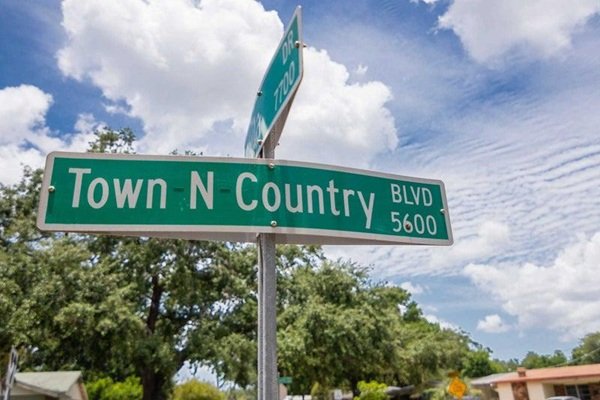
Town 'N' Country, Florida

Tree Service in Town 'N' Country, FL

Tree care built for Town 'N' Country's tightly spaced ranch-style subdivisions, canal and drainage-ditch lots, mobile home communities, and rental properties near Tampa International Airport.

Tree service in Town 'N' Country, Florida
A Dense Mid-Century Suburb

What Makes Town 'N' Country Tree Care Different

Town 'N' Country grew up in the 1960s and 70s as one of the first large suburban expansions west of Tampa, and its housing stock still reflects that era — long rows of single-story ranch homes on modest, tightly spaced lots, mixed with mobile and manufactured home communities and a growing share of rental properties. Trees planted when those subdivisions were new, often laurel oaks, camphors, and slash pines, are now decades old and considerably larger than the yards they were originally set into.

That combination of mature trees and narrow side-yard spacing is the defining challenge here. A tree that was a reasonable size for its lot in 1975 can now have a canopy that overlaps a neighbor's roofline, a root system pushing into a shared fence line, or limbs hanging directly over a carport. Because Town 'N' Country is unincorporated, tree removal falls under Hillsborough County rules rather than City of Tampa ordinances, though the general principle of confirming permit requirements for protected species still applies.

The area is also shaped by water in a way that's easy to overlook from the street. Much of Town 'N' Country drains through the Sweetwater Creek watershed, and a network of canals and roadside drainage ditches runs through many subdivisions. Low-lying yards near these channels can hold standing water longer after heavy rain than newer, better-graded developments, which affects both root health over time and how equipment can safely access a yard right after a storm.

Proximity to Tampa International Airport along the Memorial Highway and Veterans Expressway corridor is another local factor, though a minor one for most properties — it mainly comes up for unusually tall trees near flight paths rather than typical residential canopy work.

Traffic and commercial frontage along corridors like Hillsborough Avenue and Waters Avenue also shape a portion of the tree work here, since properties fronting these busier roads sometimes have street trees or landscape buffers that fall under different maintenance expectations than a quiet interior street.

Property Types

The Kinds of Properties We See in Town 'N' Country

Few areas near Tampa pack as many different housing types into one community as Town 'N' Country, and each one comes with its own set of tree care priorities.

1960s-70s Ranch Subdivisions

Rows of single-story homes on narrow lots, often with mature laurel oaks or camphor trees planted close to the house.

Mobile & Manufactured Home Communities

Homes with tie-downs and skirting close to ground level, where falling limbs and root heave near the pad are a particular concern.

Rental & Investment Properties

A meaningful share of the area's housing stock is tenant-occupied, with requests often coming from an owner or property manager off-site.

Canal & Drainage-Ditch Lots

Properties backing onto a canal or roadside ditch, where trees closer to the water need different access and rigging.

Small Multifamily & Duplex Sites

Older duplexes and small apartment buildings with shared yard space and trees affecting more than one unit at once.

Fifty Years of Growth on Small Lots

Narrow Lots, Shared Fence Lines & Aging Trees

A tree that's spent fifty years growing on a lot built for a much smaller footprint tends to run into problems in fairly predictable ways. Roots can lift a shared fence or crack a driveway slab as they spread further than the original planting plan anticipated. Canopies from adjacent yards often merge overhead, which complicates deciding whose responsibility a given limb actually is once it's hanging over a property line. And because many of these trees have never had structural attention beyond basic trimming, deadwood and weak branch unions are more common here than on newer plantings.

Side-yard access is the other recurring issue. Where a newer subdivision might have a six-foot gap between houses, older Town 'N' Country lots sometimes have less, which limits where a crew can bring in a chipper or stage debris without working through a neighbor's yard as well. Confirming access on both sides of a property, not just the one being worked on, is often part of scoping the job correctly.

Species also matters more here than the age of the trees alone. Camphor trees, common throughout these older subdivisions, tend to develop wide, low branching with weak attachment points as they mature, which is a different structural profile than the laurel and live oaks planted on the same streets. Recognizing which species is which changes what a reasonable pruning or removal plan actually looks like.

Working Around Drainage

Canals, Ditches & Standing Water

The Sweetwater Creek watershed runs through a large part of Town 'N' Country, and the canal and ditch network built to manage it is a fixture of daily life in the area during Florida's wetter months. Trees growing right along a canal bank or drainage easement often have roots extending into saturated soil for much of the year, which can affect long-term stability differently than a tree on a well-drained upland lot.

Beyond the trees themselves, standing water after a storm can limit when and how a yard can safely be accessed at all. A low-lying backyard that holds water for a day or two after heavy rain isn't unusual here, and scheduling around that — rather than bringing heavy equipment onto saturated ground — helps avoid additional damage to the lawn or the equipment itself. See storm cleanup for more on how post-storm debris and standing hazards are typically handled.

Trees directly on a drainage easement occasionally raise the question of who's responsible for maintenance — the property owner or the county — which is worth confirming before assuming a tree is fully within your own scope of work. This is a more common question here than in drier, better-drained parts of the service area.

Two Common Situations

Rental Properties & Mobile Home Communities

Two property types come up often enough in Town 'N' Country to deserve their own attention, each with a different set of practical considerations.

Rental & Investment Properties

With a large share of the housing stock tenant-occupied, tree work is frequently arranged by an owner or property manager who isn't on-site day to day. Common considerations include:

  • Coordinating access with a tenant ahead of the visit
  • Documentation suitable for owner or management records
  • Addressing deferred maintenance on trees left unattended for years
  • Scheduling around lease terms or move-out timing

See commercial tree service for portfolio-wide options if you manage multiple properties in the area.

Mobile & Manufactured Home Communities

Homes set on piers with tie-down anchors and skirting close to ground level need a different level of care during nearby tree work. Common considerations include:

  • Keeping falling limbs clear of the home's tie-downs and skirting
  • Root heave near a home's pad or utility hookups
  • Tighter lot spacing typical of many mobile home parks
  • Coordinating with a park's management where required

See tree removal for planned removal of trees that have outgrown a mobile home lot.

What To Watch For

Signs Worth a Closer Look in Town 'N' Country

Between decades-old trees, standing water, and tight lot spacing, a few specific warning signs are worth flagging on Town 'N' Country properties.

🌳

Overgrown 1970s Plantings

Trees planted when a subdivision was new have often outgrown their original spacing, with canopies now overlapping neighboring roofs.

💧

Standing Water Around the Base

A trunk sitting in water for extended periods after rain can point to poor drainage that stresses roots over time.

🧱

Lifted Fences or Cracked Slabs

Root growth pushing against a shared fence line or driveway is common on lots where trees have had decades to spread.

🏠

Limbs Over a Mobile Home Roof

Lightweight mobile home roofing is more vulnerable to falling limb damage than standard shingle roofs.

🍂

Deferred Maintenance on Rentals

Trees on long-term rental properties sometimes go years without trimming, accumulating more deadwood than expected.

🌊

Eroding Canal or Ditch Banks

Soil washing away along a canal edge can expose or destabilize nearby root systems gradually, without obvious above-ground signs.

Frequently Asked Questions

Town 'N' Country Tree Service FAQs

Is Town 'N' Country part of the City of Tampa?

No. Town 'N' Country is unincorporated, so tree removal is governed by Hillsborough County regulations rather than City of Tampa ordinances. Certain protected species and sizes may still require a permit, so confirm with the county before removal.

Do trees near drainage canals need special handling?

Trees growing along a canal bank or drainage easement can have less stable footing than trees on level yard, and roots may extend into the waterway itself. Equipment placement and rigging are usually adjusted to avoid disturbing the bank or blocking water flow.

Can you work around a mobile home's tie-downs and skirting?

Yes. Mobile and manufactured homes have tie-down anchors and skirting close to ground level that need to stay clear of falling limbs and equipment, which is factored into how a removal or trim near the home is planned.

Do you work with landlords and property managers in Town 'N' Country?

Yes. A number of Town 'N' Country properties are rentals, and requests often come from a landlord or property manager rather than the resident. Scheduling and any tenant coordination can be worked out ahead of the visit.

Are there tree height restrictions near Tampa International Airport?

Properties near flight paths may fall under FAA obstruction guidelines depending on proximity and tree height, though this typically only becomes relevant for unusually tall trees close to the airport. Check with the appropriate authority if height is a specific concern.

Why do Town 'N' Country yards flood more than newer subdivisions?

Much of the area was developed in the 1960s and 70s using drainage standards from that era, and low-lying lots near the Sweetwater Creek watershed can hold water longer after heavy rain than more recently engineered subdivisions.

Related Services

Services Commonly Requested in Town 'N' Country

See the full list of services on the services page, or explore nearby coverage in West Tampa, Carrollwood, and other areas on the service areas page.

Need Tree Service in Town 'N' Country?

Request a Free Estimate Today