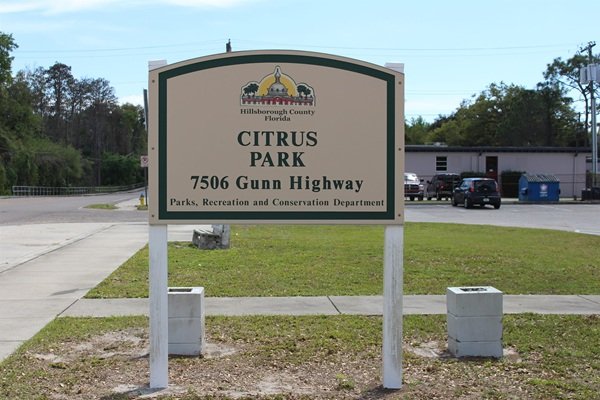
Tree care built around Citrus Park's HOA-governed subdivisions, sandy well-drained soil, wetland conservation buffers, and the Citrus Park Town Center commercial corridor.
Citrus Park sits in northwest Hillsborough County, and much of the land it now occupies was pine flatwoods and citrus grove property before residential development took off in the 1980s and 1990s. That history shows up today as a mix of preserved native pines and scrub oaks scattered among the landscaping trees planted when each subdivision was built — a different pattern than either the century-old canopy of South Tampa or the working-class bungalow grid of West Tampa.
Soil is a real factor here. Citrus Park's sandy, well-drained ground behaves differently than the denser, more clay-influenced soil found closer to the Hillsborough River or in older parts of the city. Sandy soil drains quickly, which is generally good for avoiding standing water, but it can also mean a tree's root system anchors differently, particularly during heavy rain followed by rapid drying, and particularly for species that evolved in less porous ground.
Governance shapes tree decisions in Citrus Park almost as much as it does in New Tampa's master-planned communities. Established subdivisions like Cheval, along with numerous other platted communities throughout the area, operate under HOA deed restrictions that frequently touch on landscaping and tree maintenance, meaning a homeowner's tree plans often need to account for community rules in addition to the practical work itself.
Finally, the commercial corridor around Citrus Park Town Center adds a retail and property-management dimension not found in Citrus Park's residential streets — parking lot islands, retention pond buffers, and shared landscaping that calls for a different kind of coordination than a single-family yard. Pruning, trimming, and health assessments here often need to account for HOA rules, sandy soil, or commercial scheduling depending on where the property sits.
Citrus Park covers a range of property contexts, from established golf-community subdivisions to the retail corridor built up around its namesake mall.
A master-planned golf community with mature landscaping trees and HOA design guidelines covering much of the visible tree canopy.
A mix of established single-family subdivisions along one of the area's main north-south routes.
The retail and commercial corridor surrounding the mall, with parking lot landscaping and shared common-area trees.
Neighborhoods bordering conservation buffers and drainage easements where tree work near the boundary line needs extra care.
A mix of older and newer residential streets connecting Citrus Park to neighboring Town 'N' Country.
Tree care requests in Citrus Park generally fall into two categories, shaped by whether the property is a governed residential subdivision or part of the area's commercial retail footprint.
Communities like Cheval and other platted neighborhoods throughout Citrus Park often have design guidelines that extend to tree removal, trimming visible from the street, and common-area landscaping.
See tree pruning for the structural work common on subdivision landscaping trees.
Retail and office properties around Citrus Park Town Center manage shared landscaping, parking lot islands, and retention pond buffers, generally under property management rather than a single owner.
See commercial tree service for more on managing tree care across a retail property.
The sandy, well-drained soil common throughout Citrus Park drains rainfall quickly, which generally works in a property's favor when it comes to avoiding standing water. But that same fast drainage means the soil around a tree's root zone can shift between saturated and dry more rapidly than the denser soil found in other parts of Tampa, and species that aren't well suited to sandy conditions can develop shallower, less secure root systems as a result.
This matters most for trees that were already established on a lot before development — a preserved slash pine or scrub oak left standing when a subdivision was built often grew up in native, undisturbed soil, only to have grading, irrigation changes, and nearby construction alter the conditions around it years later. A tree that looked completely stable for years can become more vulnerable once its surrounding soil and drainage patterns change, which is worth keeping in mind for any older tree on a property that's seen recent construction or landscaping work nearby.
Newer landscaping trees face a different but related challenge: sandy soil can make it harder for a young tree to establish a deep, well-anchored root system in its first several years, which is part of why structural pruning and occasional root zone checks matter even on trees that look small and low-risk.
Between sandy soil, HOA landscaping standards, and wetland-adjacent lots, a few specific things are worth watching for on Citrus Park properties.
A native pine that's stood for years but develops a new lean after nearby grading or construction deserves a structural check.
Erosion or exposed roots after heavy rain can be more noticeable in sandy soil than in denser ground elsewhere in Tampa.
Growth extending toward a conservation easement or drainage buffer may need boundary confirmation before any trimming or removal.
Removal or major trimming visible from a shared street or entrance may need association notice before work begins.
A landscaping tree that leans easily when pushed by hand may not yet have a fully established root system in sandy soil.
Dead limbs over a parking lot island near Town Center properties are a liability concern beyond simple appearance.
Many subdivisions, including planned communities like Cheval, operate under deed restrictions that can apply to tree removal or major trimming, particularly for trees visible from the street. Check with the HOA before scheduling work.
Much of Citrus Park sits on sandy, well-drained soil, which drains faster than the denser soil found in parts of older Tampa. This can affect how firmly certain species anchor, particularly during heavy rain followed by rapid drainage.
Some neighborhoods border designated wetland or conservation areas, where tree removal or significant trimming near the buffer zone may be subject to additional review. Confirm boundary lines and applicable rules before work begins.
Yes. The retail corridor around Citrus Park Town Center includes parking lot islands, retention pond buffers, and shared landscaping that typically falls under commercial property management. See commercial tree service for more.
Much of the area was previously pine flatwoods and citrus grove land before residential development began in the 1980s and 1990s, so it includes a mix of preserved native pines and oaks alongside landscaping trees planted with each subdivision.
Yes. Landscaping trees benefit from structural pruning while young, and any preserved native trees kept during development may need periodic health checks as grading and drainage patterns settle over time. See tree pruning for more.
See the full list of services on the services page, or explore nearby coverage in New Tampa and other areas on the service areas page.
Quick Request
Can't connect with us by phone? Message us with the service you need. Send your request and we'll get back to you within 15 minutes.