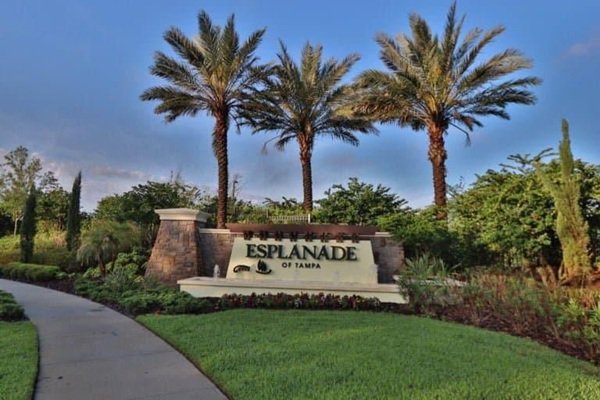
New Tampa, Florida

Tree Service in New Tampa, FL

Tree care built around New Tampa's master-planned communities, HOA guidelines, and young to establishing landscape trees — serving Tampa Palms, Live Oak Preserve, Pebble Creek, Hunter's Green, and K-Bar Ranch.

Tree service in New Tampa, Florida
A Landscape Still Establishing

What Makes New Tampa Tree Care Different

New Tampa is, true to its name, one of the more recently developed parts of the city, with most of its master-planned communities built from the 1990s through the 2010s. That timeline matters for tree care in a very specific way: unlike the century-old live oak canopy found in Tampa's historic core, much of New Tampa's tree stock is still establishing, planted as part of a development's original landscaping rather than grown up organically over generations.

Younger trees have different needs than mature ones. Structural pruning while a tree is still young helps it develop strong branch angles and a stable form, which reduces the odds of storm damage or costly corrective work once the tree matures. Skipping that early guidance doesn't always cause an immediate problem, but it tends to show up years later as poor branch structure that's harder to correct on a larger tree.

Governance is the other defining feature of tree care in New Tampa. Communities like Tampa Palms, Hunter's Green, and Live Oak Preserve operate under HOA deed restrictions and design guidelines that can extend to landscaping decisions, including tree removal or work visible from the street. A homeowner planning tree work here is often navigating both the practical side of the job and a community approval process at the same time.

Retention ponds, common throughout New Tampa's stormwater management design, add a third consideration. Trees planted along pond banks sit in a different soil and moisture environment than trees elsewhere on a lot, which can affect both their growth and, over time, their structural stability.

Communities

New Tampa Communities We Serve

New Tampa is made up largely of planned residential communities, each with its own age of development, tree maturity, and HOA structure.

Tampa Palms

One of the area's earliest master-planned communities, with landscaping trees now further along in establishing than more recent developments.

Live Oak Preserve

A community built around preserved natural tree stands alongside newer planted landscaping, creating a mix of tree ages on the same property.

Pebble Creek

Established single-family neighborhoods with HOA-guided landscaping standards for common areas and individual lots alike.

Hunter's Green

A larger master-planned community with substantial common-area landscaping and retention pond buffers throughout.

K-Bar Ranch

One of the more recently developed New Tampa communities, where much of the tree stock is still in its earliest establishing years.

Two Common Situations

HOA-Governed Properties vs. Individual Lot Trees

Tree care requests in New Tampa generally split between work that touches community-governed common areas and work confined to a single homeowner's lot.

HOA Common Areas & Street-Facing Trees

Trees along entrances, retention pond buffers, and shared green space in communities like Hunter's Green and Tampa Palms often fall under association guidelines, even when the tree sits near a specific homeowner's property.

  • Confirming HOA approval before removal or major trimming
  • Documentation for board records where required
  • Coordination with community management companies
  • Consistency with neighborhood landscaping standards

See commercial tree service for more on working with HOAs and community associations.

Individual Lot Trees

Trees within a homeowner's platted lot, away from common areas, are generally the owner's decision, though many communities still require notice or design review for visible changes.

  • Structural pruning for young, establishing trees
  • Routine trimming and clearance from the home
  • Removal of trees damaged during construction or storms
  • Stump grinding from original landscaping changes

See tree pruning and tree trimming for the services most requested on individual lots.

Local Considerations

Retention Ponds & Young Tree Structure

Stormwater retention ponds are a defining design feature across New Tampa's planned communities, and the trees planted along their banks sit in a different environment than trees elsewhere on a property. Water levels in these ponds fluctuate with rainfall, and the soil closest to the bank tends to stay softer and more saturated than ground farther away, which can affect how firmly a tree's root system anchors over time.

That's not a reason to avoid planting near a pond — many communities were designed that way intentionally — but it is a reason to pay closer attention to any pond-adjacent tree that develops a new or worsening lean, since the usual visual cues can be harder to read against a backdrop of naturally sloped terrain.

Structural training matters just as much for trees well away from any pond. Many New Tampa trees are still young enough that early guidance — removing competing leaders, correcting weak branch angles, spacing out major limbs along the trunk — has a real, lasting effect on how the tree holds up decades from now. This is a different kind of pruning than the deadwood removal common on older, already-established trees, and it's worth flagging specifically because it's easy to overlook on a tree that still looks small and low-maintenance.

What To Watch For

Signs Worth a Closer Look in New Tampa

Between young tree structure, retention pond exposure, and HOA landscaping expectations, a few specific things are worth watching for on New Tampa properties.

🌱

Weak Branch Angles on Young Trees

Tight, narrow branch unions on a still-developing tree are more prone to splitting as the tree grows and gains weight.

🌊

Leaning Trees Near Pond Banks

A new or increasing lean on a tree planted close to a retention pond deserves a structural check sooner rather than later.

🪴

Stunted Growth Compared to Neighbors

A tree noticeably smaller or slower-growing than similar trees nearby may be dealing with compacted or altered soil conditions.

📋

Work Visible From the Street

Removal or major trimming visible from a common area or entrance may need HOA notice before work begins.

🍂

Storm-Damaged Landscaping Trees

Younger trees can suffer disproportionate damage in high winds if they haven't developed a fully established root system yet.

🌳

Preserved Native Trees Near New Construction

In communities like Live Oak Preserve, older native trees kept during development may need a different care approach than the surrounding planted landscape.

Frequently Asked Questions

New Tampa Tree Service FAQs

Does my New Tampa HOA need to approve tree work?

Most master-planned communities, including Tampa Palms and Hunter's Green, have deed restrictions or design guidelines that can apply to trees, particularly removals or work visible from the street or a common area. Check with the HOA before scheduling work.

Why do New Tampa trees seem younger than trees in older parts of the city?

Much of New Tampa was developed from the 1990s through the 2010s, so trees planted with the original landscaping are still establishing compared to the century-old canopy found in Tampa's historic core.

Can trees near a retention pond cause issues?

Trees planted close to retention pond banks can be affected by fluctuating water levels and softer soil near the edge, which may affect root stability over time. A structural check is worthwhile if a pond-adjacent tree shows a new or increasing lean.

Do new construction neighborhoods in New Tampa still need tree care?

Yes. Even recently built neighborhoods around K-Bar Ranch have landscaping trees that need structural pruning while young to establish good branch structure, reducing problems later as the tree matures. See tree pruning for more.

Are HOA-planted street trees my responsibility to maintain?

This depends on the specific community's governing documents. In some New Tampa neighborhoods, common-area and right-of-way trees are maintained by the HOA, while trees within a homeowner's platted lot are the owner's responsibility.

How does New Tampa's newer soil and grading affect tree health?

Development grading sometimes compacts soil or alters natural drainage, which can affect how well a young tree's root system establishes compared to undisturbed native soil. A struggling tree may be worth having assessed for underlying soil conditions.

Related Services

Services Commonly Requested in New Tampa

See the full list of services on the services page, or explore nearby coverage in West Tampa and other areas on the service areas page.

Need Tree Service in New Tampa?

Request a Free Estimate Today