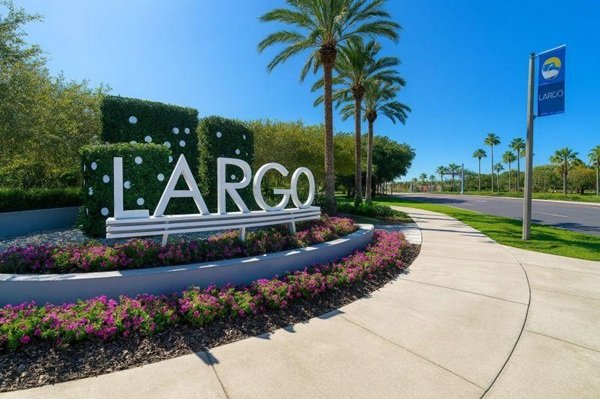
Tree care built around Largo's aging mid-century canopy, small-lake residential lots, and the Pinellas Trail corridor — serving Largo Central, Ridgecrest, Bardmoor, and Whitney Groves.
Largo grew rapidly during the suburban development boom of the 1960s and 1970s, and much of its residential canopy dates back to that same era. Laurel oaks in particular were planted throughout Largo's subdivisions as a fast, reliable source of shade — and decades later, that same fast growth is starting to work against them. Laurel oaks tend to have a shorter functional lifespan than slower-growing live oaks and are more prone to internal trunk decay as they pass the 40- to 50-year mark, which describes a large share of the trees currently standing in Largo's older neighborhoods.
Largo's terrain adds another layer that's less about tree age and more about geography. The city is dotted with small lakes and stormwater retention ponds woven directly into its residential subdivisions, and a meaningful number of Largo lots back directly onto one of these bodies of water. Trees planted at the water's edge deal with fluctuating water tables and softer, less stable soil than trees on higher ground elsewhere in the yard, which can affect root anchoring over time in ways that aren't always obvious from a casual look.
The Pinellas Trail, a paved multi-use corridor that runs through Largo on a former rail line, borders a number of residential backyards and commercial properties along its route. Canopy and debris along the trail need to stay clear enough to preserve sightlines and safety for cyclists and pedestrians, which is a consideration specific to the properties that happen to sit along this particular stretch of the county.
Largo also administers its own tree protection rules as an incorporated city within Pinellas County, separate from the requirements that apply across the bay in Tampa and Hillsborough County — worth confirming directly with the city before any removal, particularly for older specimen trees.
Largo's residential and commercial character varies by pocket, shaped by when it was built and what it borders.
The city's older core, near Largo Central Park, with mature shade trees from Largo's earliest development years.
A well-established residential area with a dense mid-century tree canopy typical of Largo's original subdivisions.
A golf-course community with landscaped common areas and mature trees bordering fairways and residential lots.
A quieter residential pocket with a mix of long-owned homes and mature laurel oaks and pines.
Largo's primary commercial and industrial corridor, home to office parks, retail centers, and warehouse properties.
Largo properties generally fall into one of two tree care situations, depending on the age of the canopy and how close the lot sits to water.
Homes in Largo's original 1960s and 1970s subdivisions often have decades-old laurel oaks and pines that are now reaching the point where structural issues become more common.
See tree pruning and arborist services for the assessments most relevant to older canopy.
Properties backing onto one of Largo's many small lakes or stormwater ponds deal with a different set of root and soil considerations.
See tree removal for how removal is planned on lots with limited, water-adjacent access.
The Pinellas Trail runs through Largo along a former rail corridor, and a number of residential backyards and commercial lots sit directly along its route. Properties in this position have a consideration that doesn't apply elsewhere in the city: keeping overhanging branches and accumulated debris clear of the trail surface itself, since the corridor sees a steady flow of cyclists and pedestrians who rely on clear sightlines and an unobstructed path.
Trimming or removing a tree near the trail also means planning around trail traffic during the work itself — cutting and debris handling has to account for people passing through rather than an empty side yard, which changes the timing and staging of a job compared to a similar tree elsewhere on the same property.
Beyond the safety angle, trail-adjacent trees are often part of what gives that stretch of Largo its shaded, established feel, so removal along the corridor is usually approached as a last resort after pruning or structural support options have been ruled out through an assessment — see tree cabling and bracing for one such alternative to full removal.
Given the mix of aging canopy and lake-adjacent lots across the city, a few specific warning signs come up more often in Largo than elsewhere.
A once-full laurel oak that's noticeably thinning is a common early sign of age-related decline in Largo's original subdivisions.
Conks or soft trunk tissue on a 40-plus-year-old shade tree can indicate decay that's been developing for years.
Softer soil near Largo's many small lakes can allow a lean to develop faster than it would on higher ground.
Branches encroaching on the Pinellas Trail corridor should be addressed before they affect cyclist or pedestrian clearance.
Heavy rain events can loosen root anchoring on lakefront lots even without an obvious lean showing up right away.
Landscaped buffers along Ulmerton Road properties can go years without attention until they become a liability concern.
Largo administers its own tree protection requirements separate from Tampa and Hillsborough County, and certain protected species or specimen-size trees may require city approval before removal.
Much of Largo was developed during the mid-century suburban boom of the 1960s and 1970s, and laurel oaks were widely planted as fast-growing shade trees throughout that era.
Laurel oaks generally have a shorter typical lifespan than live oaks and are more susceptible to internal decay past 40 to 50 years old, even when they look fine from the outside.
Largo has numerous small lakes and stormwater ponds throughout its neighborhoods, and trees near the water's edge can be affected by fluctuating water levels and softer soil, which may reduce root stability over time.
Properties backing onto the trail need to keep canopy and debris clear for cyclist and pedestrian visibility, and work near the trail should be coordinated to avoid blocking or endangering trail users.
Yes. The corridor includes office parks, retail centers, and industrial properties, many with landscaped buffers and parking-lot trees that benefit from scheduled maintenance. See commercial tree service for more.
See the full list of services on the services page, or explore nearby coverage in St. Petersburg and other areas on the service areas page.
Quick Request
Can't connect with us by phone? Message us with the service you need. Send your request and we'll get back to you within 15 minutes.