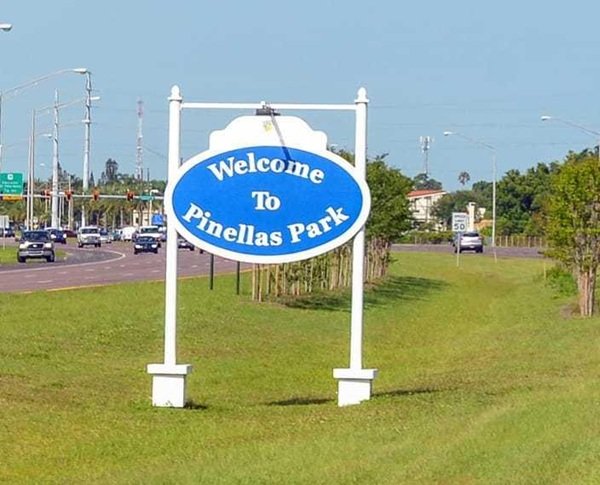
Tree care built around Pinellas Park's manufactured home communities, canal-adjacent lots, and the Bryan Dairy Road industrial corridor — serving Mainlands, Freedom Lake, and the surrounding neighborhoods.
Pinellas Park sits inland from the county's beach communities, and its housing stock reflects a different kind of growth than the coastal cities around it — a large share of manufactured and mobile home communities alongside more conventional site-built neighborhoods. That mix matters directly for tree work, since a falling limb that a standard roof would shrug off can cause real damage to the lighter roof and wall construction typical of a manufactured home, which is why trees near these communities are often held to a stricter deadwood and clearance standard than the same tree would need elsewhere.
Lot spacing compounds the issue. Many of Pinellas Park's manufactured home communities are laid out with narrower spacing between units and shared common areas than a typical single-family subdivision, which limits where equipment can be positioned and calls for more precise, sectional removal to avoid affecting a neighboring home during the job.
The city is also threaded by the Cross Bayou Canal and a broader drainage network that channels stormwater toward Tampa Bay, and properties along these waterways deal with softer soil and periodic water level changes that can affect root stability over time — a smaller-scale version of the waterfront considerations seen in coastal parts of the county, without the salt exposure that comes with direct bay or Gulf frontage.
On the commercial side, the Bryan Dairy Road corridor has developed into one of Pinellas County's notable office and industrial park districts, bringing a different set of priorities: landscaped buffers, parking-lot trees, and liability considerations that call for scheduled maintenance rather than reactive service calls.
Pinellas Park's character shifts from age-restricted communities to working industrial corridors within just a few miles.
A well-established, deed-restricted 55-and-over community with its own landscaping and tree-care guidelines.
Residential neighborhoods bordering Freedom Lake Park, with a mix of established shade trees near the water.
Properties along the canal and its connected drainage system, where soil conditions differ from higher, drier lots.
A long-established commercial and residential mix along one of the city's primary north-south routes.
Pinellas Park's main office and industrial park district, with landscaped buffers and parking-area trees.
The type of housing on a Pinellas Park property changes what a careful tree assessment actually needs to look for.
Lighter roof and wall construction, combined with tighter lot spacing, calls for a more conservative approach to nearby trees.
See tree trimming for the routine maintenance most relevant to these communities.
Standard single-family homes on wider lots generally allow more flexibility in equipment access and timing.
See tree removal and stump grinding for the services most requested on these properties.
Cross Bayou Canal and its connected drainage system run through parts of Pinellas Park on their way toward Tampa Bay, and properties along this network deal with a soil environment that's noticeably different from higher, drier lots elsewhere in the city. Trees planted close to the water's edge sit in soil that stays wetter for longer after heavy rain, which can gradually loosen root anchoring even on a tree that shows no outward signs of stress.
This isn't the same as the direct saltwater exposure seen on Tampa Bay or Gulf-front properties — Cross Bayou's water is largely freshwater drainage rather than open estuary — but the softer soil and periodic water level swings still warrant attention after a sustained wet period, particularly for larger trees whose root spread extends close to the canal bank.
A structural check after any unusually heavy rain event is a reasonable precaution for canal-adjacent trees, especially ahead of hurricane season when the same soil conditions combine with higher wind exposure — see arborist services for what that kind of assessment typically involves.
Given the mix of manufactured housing, canal-adjacent lots, and commercial corridors across the city, a handful of warning signs come up more often here than elsewhere.
Any dead limb positioned over a manufactured home's roof deserves prompt attention given the lighter construction involved.
Softer soil along the canal can allow a lean to develop faster than on higher ground elsewhere in the city.
Branches encroaching on a neighboring manufactured home in a closely spaced community should be trimmed back promptly.
Conks at the base of a mature tree near Freedom Lake or the older residential core can point to internal decay.
Canal-adjacent trees are worth checking after any sustained heavy rain, even without an obvious lean.
Landscaped buffers along Bryan Dairy Road properties can go unattended for years until they become a liability concern.
Manufactured and mobile homes generally have lighter roof and wall construction, so a falling limb that a conventional roof might shrug off can cause more significant damage. Trees near these communities are often held to a tighter deadwood and clearance standard.
Requirements vary, but many age-restricted and deed-restricted neighborhoods have landscaping guidelines that call for HOA notification or approval before significant tree work. Checking with the community association first can avoid delays.
Properties along the canal and drainage network can have softer soil near the water's edge and periodic water level changes, both of which can affect root stability over time, especially after heavy rain.
Yes. Pinellas Park is an incorporated city with its own tree protection rules, separate from Tampa and Hillsborough County. Certain protected species or larger specimen trees may require a permit before removal.
Yes. Narrower lot spacing and shared common areas limit equipment access and require more precise sectional removal to avoid affecting neighboring homes during a job.
Yes. The corridor includes office and industrial parks with landscaped buffers and parking-area trees that benefit from scheduled maintenance. See commercial tree service for more.
See the full list of services on the services page, or explore nearby coverage in Largo and other areas on the service areas page.
Quick Request
Can't connect with us by phone? Message us with the service you need. Send your request and we'll get back to you within 15 minutes.